
Autonomy, interdependence, and the ethics of care
A conversation with Diego Carmona Gallego

In this post, I’m publishing another of my Substack interviews, which act as a kind of supplement to the Careful Thinking podcast. My interviewee on this occasion is Diego Carmona Gallego, an Argentinian researcher, currently working in Spain, whose work focuses on disability and the ethics of care. Interestingly, Diego has worked in the past with Spanish philosopher Irene Comins Mingol, whose interview I posted here last year.
Diego has a Master’s degree in Health Psychology from the National University of Rosario in Argentina and a doctorate in Social Sciences from the National University of Entre Ríos. He was a postdoctoral researcher at the National Scientific and Technical Research Council of Argentina (CONICET) and is a member of the Argentine Network of Health Care Research (RAICES). He has been a guest professor at the Universitat Oberta de Catalunya, the University of Granada, the National University of Entre Ríos, and the National University of Córdoba. He is currently a postgraduate professor and health psychologist at ASPAYM, the Association of People with Spinal Cord Injuries and Physical Disabilities, in Granada.
Diego, who is a regular listener to the podcast, contacted me earlier this year to let me know about his research, which challenges the notion of ‘independence’ in disability studies, which he sees as reflecting a neoliberal ideal of self-sufficiency, and about his work developing a theory of ‘interdependent autonomy’. To date, Diego’s research has been published only in Spanish, but I believe it deserves a wider audience, so I was pleased that he accepted my invitation to be interviewed.
As I noted in a post last year, there’s a tendency for work in care theory that isn’t published in English to be overlooked or marginalised. It’s also the case that research on care from Latin America is still not very well known elsewhere (even if, thanks to reporting by Mélina Magdelénat and others, some of the innovative care-related policy developments on that continent are becoming better known), so I was pleased to be able to offer this insight into the work of Diego and other researchers with whom he is connected in Argentina. I’m grateful to Diego for taking the time to provide such full and thoughtful answers to my questions.
Diego’s research has clear connections with the work of a number of guests who have featured on the Careful Thinking podcast. I’m thinking particularly of Aaron Jackson’s research with fathers of disabled children, Melody Escobar’s study of the experiences of mothers of children with disabilities, and Lorraine Krall McCrary’s investigation of ‘caring communities’ organised by and for disabled people, while the themes of autonomy, dependency and interdependence which Diego explores have been the focus of many of my podcast interviews and posts on this site. Diego offers a fresh Latin American perspective on these issues as both a practitioner and a theorist of care.
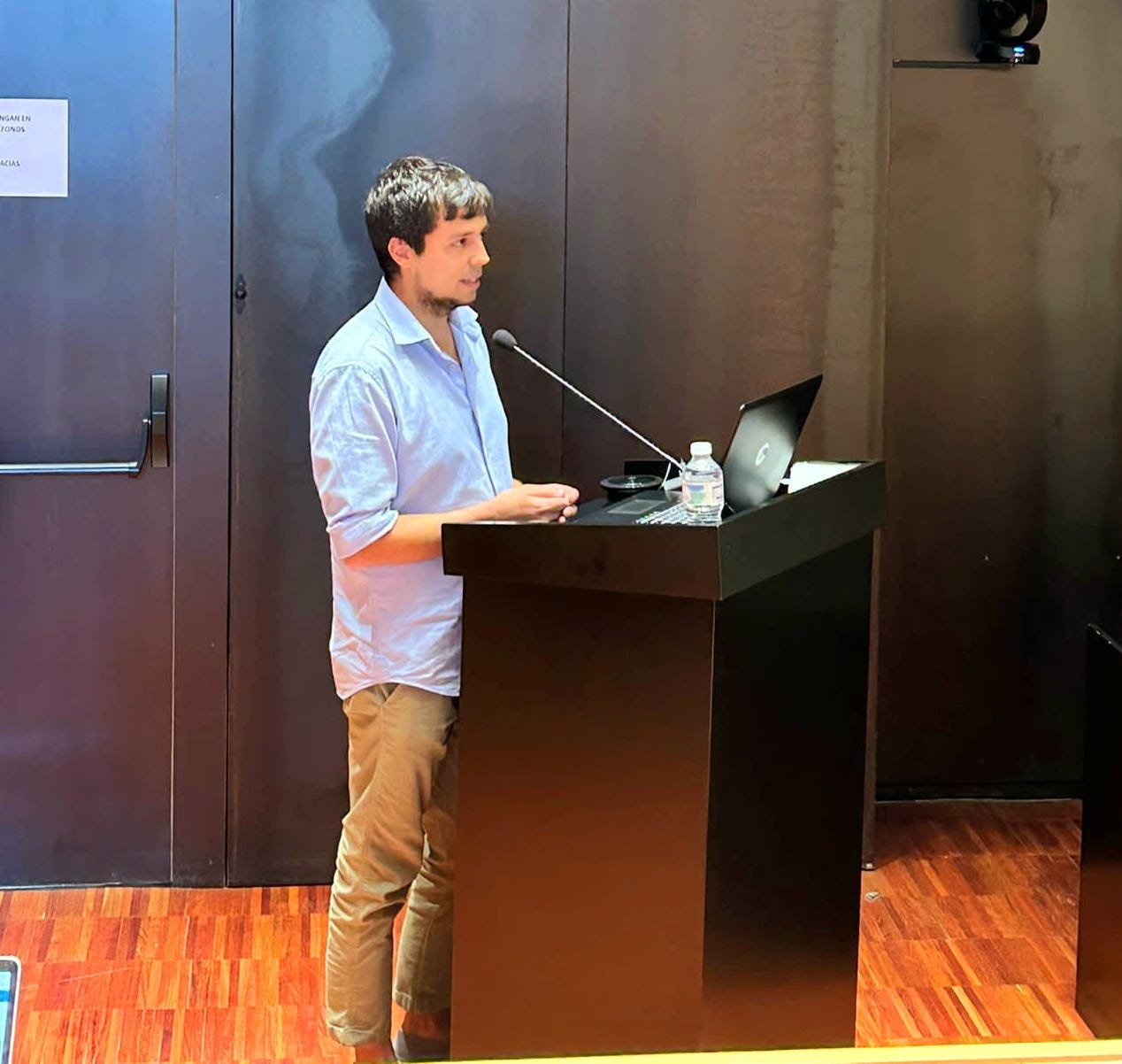
      Diego Carmona Gallego speaking at the II Congreso Internacional de Ética Profesional,
                                             Universidad de Granada, 2024
Diego, can I begin by asking you about your personal background and how it led to the work you’re doing now? Can you say something about your childhood and your education, and how you developed an interest in health psychology, and then in intellectual disability?
I grew up in a working-class environment in Ciudad de Gálvez, located in the central region of Argentina. I was raised in a home without books or university-educated professionals, and I am truly who I am today thanks to Argentine public and tuition-free education, having been fortunate to have excellent teachers at every educational level.
While the theoretical value of pursuing a degree was recognised at home and by my teachers, the everyday reality of my school environment was quite different. My peers weren’t particularly focused on academics, yet they, along with my parents, always supported me and genuinely recognised my efforts. Charting this path required some independence, but the desire to discover the world beyond my hometown gave me the strength to naturally gravitate towards reading, learning, and the habit of asking questions. During my teenage years, I discovered that literature was a way to broaden my horizons. This passion for books, coupled with my admiration for certain people, led me to choose psychology, a profession I truly love.

Diego’s primary school, Escuela Mariano Moreno 6035, in Ciudad de Gálvez
My first job was in the field of intellectual disability, and I ended up there quite by chance. I needed a job at the time, and a very good friend of mine recommended I send my CV to a residential home with a day centre for adults with intellectual disabilities. Once there, an entire world opened up to me. I had never planned on working in this sector, but it was a formative experience that left a lasting mark on me. My contact with institutionalised individuals led me to develop a critical perspective regarding the institutional logics that curtail rights and de-subjectify people, treating them as ‘non-persons’.
This constant reflection on my professional practice later drove me towards research. Therefore, my research is neither a theoretical abstraction nor a speculative exercise. I aim for it to have concrete consequences and a direct impact on the day-to-day lives of people with disabilities, both inside and outside institutional settings.
On the other hand, in that first job I discovered that by building relationships based on autonomy, listening, and trust, I could be more spontaneous and fun than I used to be. This meant that, despite the emotional toll typical of Goffman’s ‘total institutions’, I felt revitalised thanks to our collective work and the use of humour. A clear example of this was the creation of the ZL poetry magazine, a project I spearheaded alongside my colleagues. Through it, we managed to bring together resident writers with established or external authors, sharing not only a common purpose but also journeys together. I particularly remember a stay in Buenos Aires which involved living closely together; it was inspiring to work from a place of care and trust within the network we were building, entirely removed from any logic of surveillance or control.
You’ve worked in both Argentina and Spain: can you give an outline of your career to date, and also talk about where you’re working now?
Following that initial role, from 2018 onwards, I worked alongside Dr Claudia Perlo within the research group on learning and organisational development at IRICE (the Rosario Institute of Research in Educational Sciences), a centre affiliated with the National Scientific and Technical Research Council (CONICET) and the National University of Rosario. Claudia is a teacher in the deepest sense of the word; to me, she represents wisdom and a profound commitment to society in the way she approaches research. I simply could not have loved this research path without her guidance. This stage provided an enormous boost to my career; it allowed me to complete my PhD in Social Sciences and train as a researcher within a team of excellence. CONICET ranks as the number one governmental research institution in Latin America. Its entry process is highly transparent and exceptionally demanding, which provided me with a very solid methodological foundation. Thanks to this, I have been able to serve as a guest lecturer at various universities and share my research with highly diverse
stakeholders, ranging from people with intellectual disabilities and their families to sector professionals and academics.
Through this work, I was awarded the scholarship for young researchers from Latin America by the Coimbra Group (a consortium of European universities), which brought me to Spain. I completed my research stay at the University of Granada and, concurrently, I was invited by the International University of La Rioja (UNIR) to update the syllabus, content, and teaching materials for two modules within their BSc in Psychology.
Currently, I live in Granada with my family and work at an association dedicated to individuals with spinal cord injuries and physical disabilities. There, I provide psychological therapy in a clinical setting to people with various types of disabilities (physical, intellectual, and psychosocial) as well as to their family carers. In this same space, I teach courses focused on social and labour inclusion. I combine this work with my ongoing role in my research group in Argentina, where I serve actively as an external, honorary co-director.
I was interested to learn that you’ve worked with Irene Comins Mingol, whose work I really admire, and who I’ve also interviewed for this Substack. Can you say something about your connection with Irene?
Irene welcomed me most warmly during a short stay I undertook at the Universitat Jaume I in 2021. Her work has been a fundamental source of inspiration for the formulation of my research problems since 2018. Her approach to the ethics of care as a pillar of peace education is decisive in the face of contemporary challenges, thanks to a highly lucid and enlightening manner of transmission. When I met her in person, we discussed the urgency of linking masculinities with care; we agreed that, although the research agenda focuses mostly on gender inequalities in the division of domestic chores, it often overlooks the importance of a subjective transformation of traditional masculinity based on the feminist ethics of care.
Furthermore, her work is key to conceiving alternative approaches to situations of violence. This theme emerged in my doctoral thesis from one of the cases I investigated in the north-west district of Rosario (Argentina), an area heavily afflicted by armed violence and drug trafficking. Irene’s approach is incredibly powerful because it resonates with Emmanuel Levinas’ idea of peace: that it is not the mere absence of war, but rather the awakening to the precariousness of the other. It implies, therefore, recognising vulnerability as an inherent mark of the human condition. In this sense, it is worth recalling the distinction made by Mackenzie, Rogers, and Dodds regarding the uses of this term: beyond its most frequent meaning, linked to the study of the effects of inequalities, there is a dimension of vulnerability understood as the ontological exposure to being affected in our encounters with others. Within this framework, Irene’s proposal provides a multidimensional vision of care - encompassing care of the self, of others, and of nature - articulated with an education that strives for peace and an inescapable commitment to social equality.
Irene Comins Mingol
I know that you’re part of a research network in Argentina, which includes researchers like Alfonsina Angelino and Carlos Cullen. Can you say something about that network and the work of these other researchers?
In Argentina, I am part of the Argentine Network for Research into Healthcare (Red Argentina de Investigaciones de Cuidados en Salud), a space where researchers such as María Cristina Chardón come together. Her work is highly interesting because it recovers contributions from psychoanalysis, particularly from the Argentine analyst Fernando Ulloa. From this perspective, with which I closely align, care requires a bond capable of accommodating the other. To accommodate implies granting a subjective place to the person being cared for, recognising them in their uniqueness, and avoiding treating them as a mere ‘object’ of assistance. Furthermore, the tenderness that care entails on many occasions acts as a form of resistance against socially installed mechanisms of cruelty, which are fundamentally based on indifference to the suffering of others. This is the politics of the inhospitable; that is to say, the absence of the ultimate gesture of an ethics of care: hospitality.
This perspective on care finds a fundamental echo in the works of Alfonsina Angelino and Carlos Cullen. In Angelino’s case, her work demonstrates a profound commitment to disability collectives and, specifically, to mother-carers. Her work was the first approach I read concerning the ethics of care, and I consider her to be the most important contemporary authority on the subject within the Argentine context. Although her background is in social work, her approach is markedly transdisciplinary and foundational. Her research has made visible how numerous mothers deploy a labour of resistance to prevent their children’s lives from becoming encapsulated within a clinical diagnosis or a predefined circuit of socialisation and specialised treatments. This resistance to the de-subjectivation of their children, combined with her sharp reflection on how patriarchy and capitalism privatise, depoliticise, and feminise tasks of assistance, configures an inescapable theoretical framework for the contemporary study of care.
On the other hand, the work of Carlos Cullen offers a rigorous philosophical reflection that deepens the understanding of ethics from a matrix situated in Latin America. His proposal lends conceptual density to the comprehension of care as hospitality. On this point, it is relevant to recover the philosophy of Emmanuel Levinas, which Cullen articulates with the thought of Latin American authors such as Rodolfo Kusch. This genealogy is key to conceiving care beyond mere assistance; for Cullen, care is defined as any experience of welcoming that opposes domination and de-subjectivation. As he aptly points out in a phrase from his book Ética, ¿dónde habitas? (Ethics, Where Do You Dwell?): ‘ethics is a retreat into the silence of morals’. To the extent that we are able to temporarily suspend the normative codes that each era imposes as a duty-to-be, we can unburden ourselves of institutional imperatives to remain more attentive to real bonds and their unique needs.
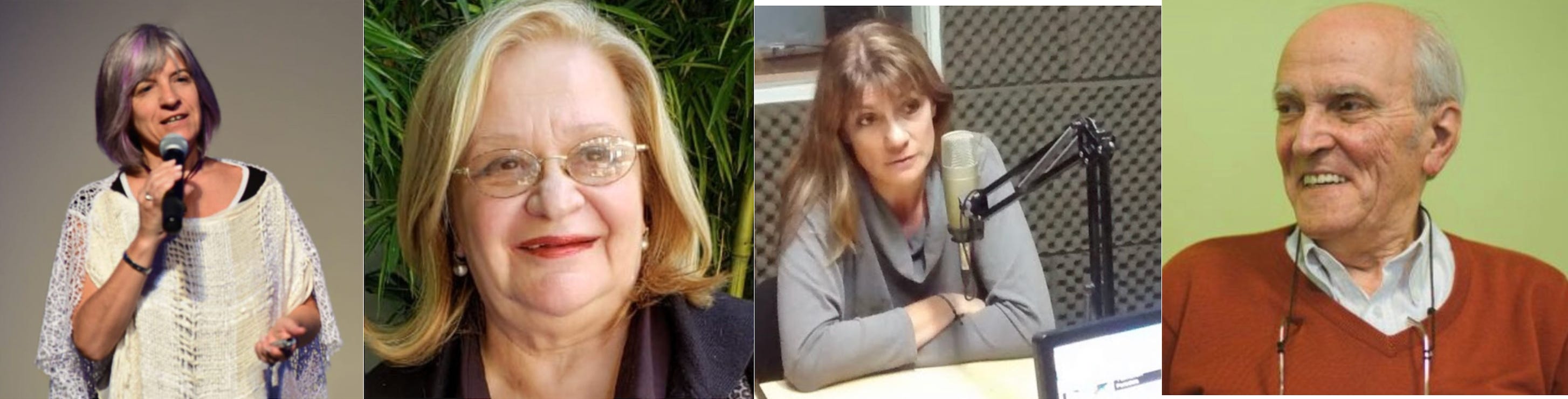
L to R: Claudia Perlo, María Cristina Chardón, Alfonsina Angelino, Carlos Cullen
In your writing, you make reference to a wide range of thinkers from various intellectual traditions, including some of the key names in care ethics, but also theorists like the Brazilian philosopher and theologian Leonard Boff, who has also influenced Irene. What would you say have been the main intellectual influences on your thinking? Who are some of the thinkers and writers on disability, and on care, who have most influenced you?
The analytic perspective constitutes a permanent source of reflection for me, dating back to my training at the National University of Rosario. Psychoanalysis brought about a revolutionary epistemological shift: the transition from a medical gaze to analytic listening produces a qualitative leap that demands accommodating the unique history of the subject and their specific relationship with suffering.
On the other hand, the thought of Edgar Morin has been key to distinguishing the nuances between critical and complex thinking. Complexity accommodates the possibility of holding contradiction simultaneously with complementarity. His critique of linear causality, characteristic of the mechanistic paradigm, has been a pillar for the development of my doctoral thesis and subsequent research. Thinking in terms of feedback loops, non-linear causalities, and uncertainty is indispensable for designing ways of practising care that do not lapse into instrumental models. I have addressed this axis in several articles; in a recent one, for instance, I examine the tensions between a mechanistic model of care based on security and a complex perspective that situates care in relation to the assumption of uncertainties within relationships. In other words, caring does not imply surveillance or pretending to know everything about others, since - recalling Levinas - it is not so much about knowing as it is about accommodating alterity.
In this trajectory, Leonardo Boff is my main reference when studying care. Indeed, his contributions prompted encounters with other Argentine researchers, such as Esteban Kipen, Leticia Costa, Vanesa Aparicio, and Marcelo Marmet. Boff understands care as something beyond an isolated act: he defines it as an attitude of occupation, preoccupation, responsibility, and affective commitment. In terms of research, this premise opens up a direct debate with the mainstream literature, which often reduces care to a mere task or technical provision. Without disregarding its practical dimension, Boff’s work focuses on care as an attitude that is cultivated socially, and one which we must strengthen to build an alternative paradigm founded on care for the Earth. His influence on my thought is decisive. In his book Essential Care: An Ethics of Human Nature, Compassion for the Earth, he notes that care is a way of relating that is not based on dominion over the other, but rather on con-vivencia (living-with). For this reason, it is not pure intervention, but interaction and communion.
This way of conceiving care has also challenged my own methodological practice. If conducting research from the perspective of traditional analytical reason often becomes an extractivist practice - aimed at extracting data to better understand an object of study - researching from the standpoint of the ethics of care implies questioning this logic and its associated mechanisms in order to commit to a convivencia alongside the people with whom we investigate.
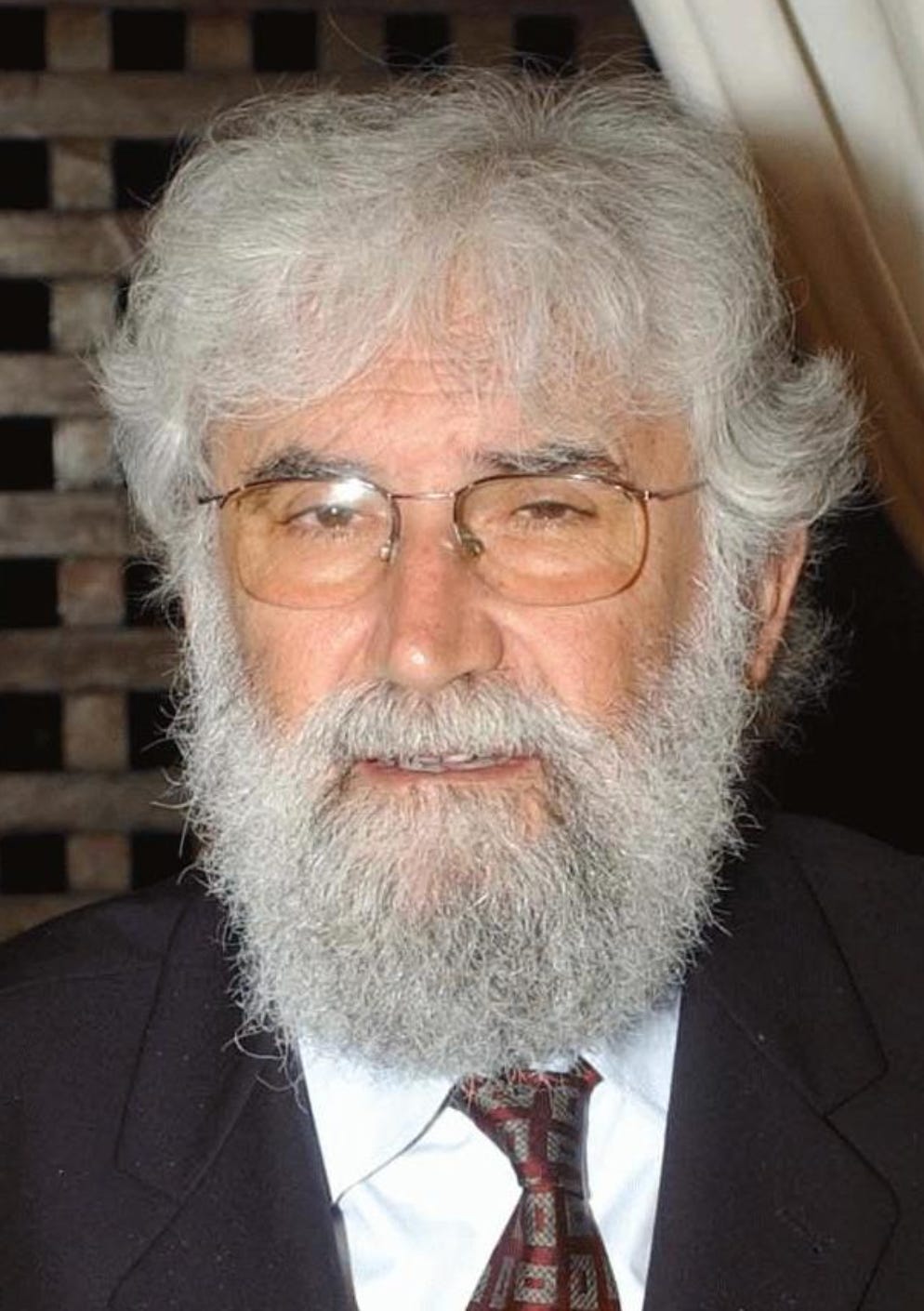
Leonardo Boff
Furthermore, my perspective draws on the most prominent Anglophone theorists in the ethics of care, such as Carol Gilligan, Eva Feder Kittay, and Joan Tronto. In particular, due to the intersection between disability and care, Kittay proves deeply inspiring by placing the relationship with her daughter Sesha at the living core of her reflection. Reading her idea of ‘nested dependencies’, as well as her understanding of care as an ethical boundary situated between indifference (or abandonment) and paternalism. It is deeply moving to read her because of her conceptual rigour combined with a profoundly embodied writing style. In a complementary line, it has been highly significant for me to train on various occasions with the Argentine epistemologist Denise Najmanovich, whose theoretical insights allowed me to conceptualise the category of receptivity.
In 2020 you published an article with the title ‘Autonomía e interdependencia. La ética del cuidado en la discapacidad’ (‘Autonomy and interdependence: the ethics of care and disability’), in which you critically review the concept of ‘self-sufficient independence’, which is often found in organisations that provide care for people with disabilities, and you discuss the relationship between autonomy, care and independence, drawing in part on the work of care ethicists such as Joan Tronto and Pascale Molinier. Can you give a summary of your main argument in that paper?
In that 2020 article, my central argument is that the traditional concept of ‘independence’ - understood as absolute self-sufficiency or the ability to do everything entirely on one’s own - is a philosophical and practical fiction that ends up marginalising and desubjectifying people with disabilities. Drawing on the work of Joan Tronto and Pascale Molinier, the article develops three main pillars to propose an alternative framework based on relational autonomy:
First, I critically examine the institutional bias toward ‘self-sufficient independence.’ Many care organisations operate under a neoliberal paradigm where autonomy is measured by a person’s ability to minimise their dependence on others. This view reduces care to a mere mechanical transaction whose sole objective is to achieve functional and physical autonomy. When the goal is strictly limited to making the individual independent in a functional sense, institutions overlook the person’s subjective desires and their unique relationship with suffering. True care is thus replaced by a model of surveillance and hyper-regulation.
Secondly, drawing on Joan Tronto’s political ethics of care, I argue that autonomy and dependence are not mutually exclusive. Human beings are inherently vulnerable and interconnected throughout their lives. Therefore, true autonomy for a person with a disability does not mean doing everything alone, but rather having the subjective capacity to make decisions about their own life within a network of supportive relationships. Care should not be a tool for eliminating dependence, but a relational framework that guarantees the right to autonomous decision-making through what I have termed ‘interdependent autonomy.’
A number of your published articles have been based on a research study in central Argentina, at a day centre for adults with intellectual disabilities and a neighbourhood living centre. Can you say something about the work of those centres, and about what your research involved and the methods you used?
My research was based on a purposive sample of two distinct care organisations in central Argentina: a private day centre for adults with intellectual and combined disabilities, and a municipal community centre (designated as a Centro Cuidar since 2022 [1]). Both institutions shared a deep interest in reflecting upon their professional practices and exploring ways to innovate through the lens of the ethics of care.
The day centre is oriented towards social and labour inclusion, where care has historically been professionalised and understood strictly as a technical ‘task’—unilaterally directed from a provider to a recipient defined as ‘dependent’. This case allowed me to analyse how the dominant social imaginary permeates institutional life, often reducing disability to intrinsic frailty and feminising care. Conversely, the community centre operates in a context of social vulnerability. There, care is not framed as a set of discrete tasks, but as a transversal dynamic rooted in hospitality, active listening, and the cultivation of relational bonds between individuals, their communities, and their ecosystems.
Methodologically, the study adopted a qualitative approach. Guided by the principles of grounded theory, the day centre was selected as an evident embodiment of the phenomenon (most development case), while the community centre provided insights into care experienced as a mode of connection. To map and contrast the perceptions and practices within both organisations, I utilised a combination of data collection methods. These included self-administered questionnaires, semi-structured interviews, open and in-depth interviews with management teams, and participant observations. Additionally, I conducted reflective conversation circles (focus groups) with the staff. These circles were inspired by the ‘culture circles’ of the Brazilian pedagogue Paulo Freire, as they specifically sought the mutual recognition of knowledges and expertise among the participants.
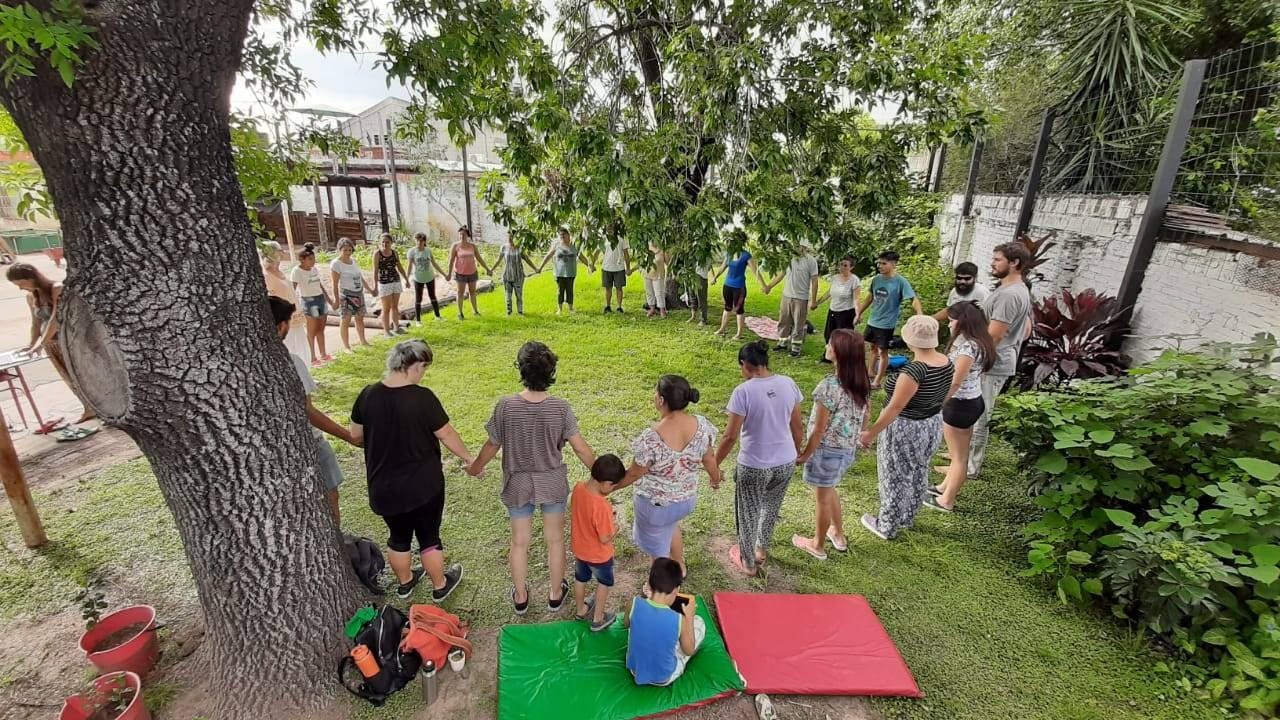
          The ‘Centro Cuidar’ in central Argentina where Diego conducted his research.
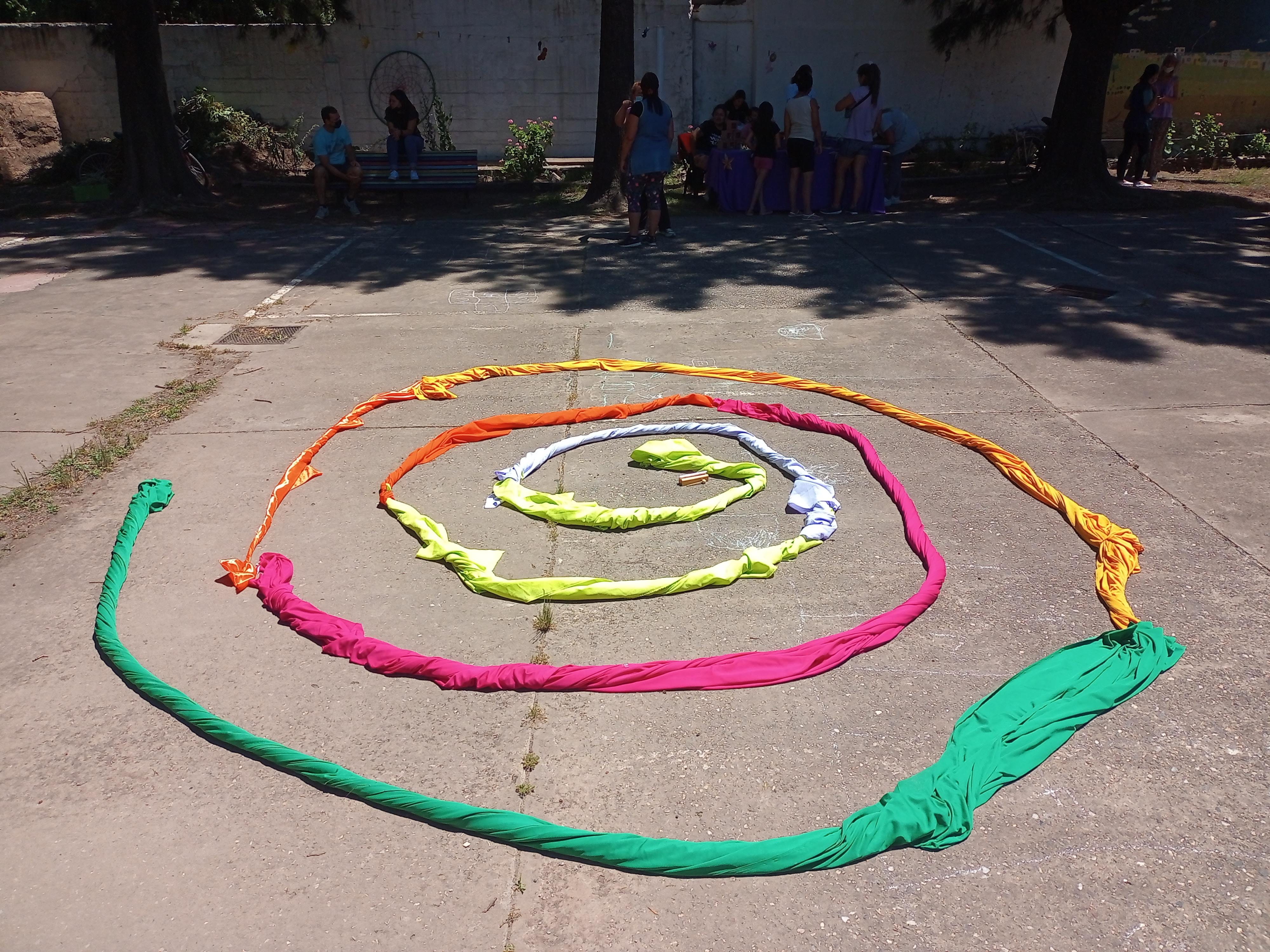
                 Regular readers may be reminded of the header image for this post.
                                    (Photo courtesy of Diego Carmona Gallego)
Your 2023 article, ‘Percepciones y prácticas de cuidado desde una dimensión ética’ (‘Perceptions and care practices from an ethical dimension’) draws on the findings from that study. As in your 2020 article, you again draw on care theorists such as Gilligan, Tronto, Molinier, Laugier, Comins Mingol and others. You write in the abstract that the results of the study ‘reflect the importance of receptivity to rethink bonds, as well as the need to cultivate a perception of the details of daily life, an aesthetic of circularity and a sense of temporality attentive to organic rhythm.’ I found your discussion of ideas of receptivity, and the notion of an 'aesthetic of circularity’ in this article fascinating. I wonder if you could give a brief summary of your thinking in this paper?
In my 2023 article, my aim was to rescue the power of care as a multidirectional mode of connection, distancing it from the mere unilateral ‘technical task’ imposed by the mechanistic paradigm. Through the analysis of my fieldwork, I demonstrate how moving towards an authentic ethos of care requires an ontological, ethical, and aesthetic shift where the ‘aesthetics of circularity’ emerges as a radical alternative to the pyramidal rigidity of productivism. This circularity is embodied, in the first instance, in the very texture of everyday gestures: authentic care requires concave and convex forms - such as a hug, a caress, or giving hands - capable of accommodating otherness without falling into evasion or crushing. Beyond gestures, the community organisation itself reclaims the circle as the geometric and political form of encounter. There, the circle materialises in the horizontal round, a setting where there are no ‘ups or downs’ and where differences are recognised within a radical equality through dialogue, embodiment, and the co-creation of a collective intimacy.
Furthermore, the studied case highlights that this circularity is inextricably linked to a rhythmic and organic temporality that emulates the cycles of nature - such as inspiration-expiration or circadian periodicity - in opposition to the automatic, factory-like time of assembly-line production. From this perspective, to care implies understanding that life is governed by periodicity and reiteration, but never by the identical repetition characteristic of machines. Registering singular rhythms to bring them into harmony requires giving oneself time and giving others time, demanding a serenity and temporal flexibility that embraces uncertainty against the fiction of absolute control. In this way, the article demonstrates the ethical relevance of the details of ordinary life; it is within the small and apparently unexceptional where people truly experience feeling cared for. In conclusion, the text postulates that, by inhabiting care through community bonds, the circle and the organic rhythm deployed by this organisation - built precisely as a humanising response to contexts fraught with issues of violence - successfully converge to foster instituting practices, moving away from a security-based paradigm focused on external control towards a network of mutual trust, reciprocity, and hospitality.
In 2024 you published another article, based on the same research study, which elaborates on the idea of receptivity. It has the interesting title: ‘Con las zapatillas puestas. Ética del cuidado y discapacidad, la receptividad como resignificación de la actividad’ (‘With sneakers on. Ethics of care and disability, receptivity as a resignification of the activity’). And in this paper you write that the results from the study ‘warn that, from the perspective and experience of some people who work in this context, caring can be both intervening in situations that require it for the people with intellectual disabilities, as well as abstaining from doing so. The practices of abstention or non-intervention reconfigure the importance given to the activity in the theoretical-conceptual delimitations around caring that exist in specialised literature. In this framework, receptivity emerges as a powerful concept to make visible those practices that are not strictly a doing, but however also make up caring.’ Can you explain your argument here, and the importance of ‘abstention or non- intervention’ in care?
The core of this argument is perfectly illustrated by Julián’s everyday situation, as he insists on taking his afternoon nap with his shoes on. Traditionally, institutional dynamics and much of the specialised literature define care exclusively as a task, a constant ‘doing;: intervening, assisting, and imposing order to ensure a predefined ‘quality of life’. From this mechanistic perspective, allowing Julián to sleep in his shoes would be misinterpreted as neglect or abandonment, since, from an external and universal point of view, it is not the most ‘comfortable’ way to rest.
However, genuine care demands an ethic of receptivity, where abstention or non-intervention has fundamental clinical and human value. When professionals decide not to force Julián to take off his shoes, they are not acting out of indifference. Instead, they engage in a conscious and deeply committed ‘non-doing.’ They suspend their own judgments, silence the institutional impulse to ‘fix’ the situation, and refrain from imposing what they believe is best.
This abstention is an active process of ‘letting be.’ It creates a vital space to embrace Julián’s independent will in the face of the imposition of standardised comfort. This receptivity redefines the activity by demonstrating that, to safeguard the right to autonomous decision-making in the context of intellectual disability, sometimes consciously choosing not to intervene can be the highest and most respectful form of care. Naming these practices is fundamental, since many forms of care consist of non-action, and because they are neither visible nor obvious, we risk assuming they don’t exist.
Last year, in 2025, you published a further article from the same research study, but this time based on questionnaires given to staff members at the organisations you were researching. ‘La lógica de la seguridad frente a la dignidad del riesgo: un análisis de las prácticas de cuidado en contextos de atención a personas con discapacidad intelectual’ (‘Safety logic versus the dignity of risk: an analysis of care practices in contexts for people with intellectual disabilities’) again explores the concepts of autonomy and dependence, and the notion of care as not acting. You write that the findings from this study ‘reveal the coexistence of two distinct models: one that sees care as an instrumental task linked to maintaining order and preventing risk, and another that understands it as a way of ethical engagement.’ Could you elaborate on your main argument in this paper?
My main argument is that many institutional practices prioritise the elimination of risk over the promotion of autonomy, ultimately giving rise to forms of control that can dehumanise care. The pursuit of a static and predictable order through a ‘safety programme’ is, as the study warns, a devitalising illusion that undermines the very existence of people with an intellectual disability. When organisations and families impose a ‘configuration of care as a task’, focused solely on harm prevention, they fall squarely into the ‘paradox of safety’. Etymologically, security means ‘without care’. Thus, the obsessive attempt to eradicate uncertainty becomes a mechanistic exercise that abdicates true caring, which demands embracing a ‘shared-common vulnerability” as an intrinsic condition of being alive.
The radical danger of this logic is that it ultimately ‘sacrifices life itself on the altar of order and control’. By standardising interactions and prioritising the rigid timetables of the institution, roles are depersonalised and the uniqueness of the subject is denied. As in the analogy of The Invention of Morel [a novel by Argentine writer Adolfo Bioy Casares, published in 1940], capturing life in an identical and absolutely predictable repetition to avoid disorder is tantamount to nullifying its developmental potential. Living systems require disorder to self-organise; therefore, a ‘zero-risk’ policy obstructs any possibility of learning, change, or personal flourishing.
Furthermore, this model unidirectionally centralises the definition of risk within the staff, excluding the perspective of the people directly affected. By preventing a service user, for instance, from going out alone for a coffee under the pretext of protecting her, what is often sought is ‘risk coverage’ so that professionals are not branded as ‘negligent’. This dynamic strips the individual of their right to experience ‘their own decisions’. Risk does not exist independently of a social construction.
Faced with these micropolitics of control, it is urgent to validate the ‘configuration of care as an ethic’, firmly linked to the ‘dignity of risk’. This implies understanding autonomy not as individualistic or self-sufficient self-reliance, but as an ‘interdependent autonomy’ that is fostered within a relational and community network. For this to be possible, staff must enable invisible practices of ‘receptivity’ and ‘conscious abstention’, which means suspending the predictive anticipation of absolute knowledge to ‘let the other be’ and ‘let the other do’. To truly care is not to eliminate the possibility of injury through domination, but rather to sustain a ‘wager’ based on ‘attentive trust’.
Moving on from these publications, can I ask about the work you’re engaged in now, and your plans for future research?
I believe it is vital to investigate in depth how disabled people act as agents of care: how they provide care, what or whom they care for, and what support and networks they rely on to do so.
This perspective is essential because caring is an inherently human dimension; everyone has the capacity to care, albeit in diverse ways. In cases where individuals with intellectual disabilities do not use verbal language to express this facet, future research should turn its attention to their support networks. It would be highly valuable for methodological studies to capture the testimonies of care professionals and families themselves, asking: how do they feel cared for by the individuals they assist? Shedding light on these invisible dynamics serves as a disruptive conceptual and political exercise that dismantles the traditional, unidirectional logic of dependency.
As we’ve discussed, your work provides a meeting point for the ethics of care and the study of intellectual disability. Where would you like to see work in this field going in the future, and what are the questions that still need to be explored?
I am currently exploring the tensions between safety and care in relation to disabled people, particularly those with intellectual disabilities. Professionals and families frequently face the dilemma of protecting an individual - at times from themselves, or despite themselves - at the risk of undermining their autonomy. I contend that it is essential to delve deeper into these dilemmas through concrete situations and from a situated perspective; failing to do so leaves us vulnerable to falling into either negligence or paternalism.
Whilst we champion a progressive approach to self-determination, when a person’s safety is at stake, security is commonly prioritised. In bioethical terms, this represents the primacy of the principles of beneficence and non-maleficence over autonomy. However, my interest lies in examining this complexity beyond mere dichotomies. This is fundamental to ensure that autonomy does not become a mere declaration of intent, and that the ‘dignity of risk’ is not used as an excuse to evade care responsibilities. Of particular interest to me is how these dynamics unfold within the specific context of organisations and services dedicated to care, as I believe this debate must be firmly placed on the agenda for future research in the field.
Finally, I just want to say a huge ‘thank you’, Martin, for inviting me to do this interview and for giving me such a wonderful space to share these reflections with you.
Note
[1] Diego explains that ‘the Centros Cuidar [care centres] belong to the Municipality of Rosario, in the central region of Argentina. They are strategically located in the city’s most vulnerable neighbourhoods to enable the inclusion of entire families, promoting the full exercise of their rights through various initiatives’.
…
The header image for this post is an image from the Centro Cuidar where Diego undertook his research, and whose motto is Un espacio para reencontrarse con la propia naturaleza (A space to reconnect with one’s own nature), which (Diego explains) ‘does not propose a regressive nostalgia or a return to the identical, but a journey of transformation embodied in the figure of the spiral.’ He adds: ‘Unlike the closed circle that condemns time to a sterile repetition, the spiral embraces cyclicality as an infinite movement where the past integrates with the present, allowing one to return to oneself but “from another place”. Furthermore, this relates to the recovery of ancestral knowledge from indigenous Andean peoples of Latin America. For example, it revives the care for the land that these peoples practised and continue to practise, as well as the communal mud constructions known as mingas. This aesthetic of the open, moving circle ultimately merges with an ethical dimension: a reverential curvature of Levinasian inspiration that bows to alterity, shaping a hospitable space where respect for the Other’s autonomy and dignity guides every process of change.’ Photo courtesy of Diego Carmona Gallego.
Thank you for this, what a wealth of resources to think about and come back to ! I indeed have come to think that care ethics is at its best when it involves dialogue from many different cultural contexts, rather than just intra-Anglophone world.
Autonomy becomes thinner when it is imagined as independence from need. A relational decision can be fully autonomous; sometimes the relation is what lets a real preference become thinkable in the first place.
Clinical language can miss this when it asks whether someone can decide "for themselves," as if "for themselves" meant alone. Often a person can only articulate a genuine choice once dependence stops being read as a failure of personhood.
Non-intervention belongs to this picture too. Care includes the discipline of recognising when an offered act would override a person's own rhythm. Dignity is not restored by making someone look self-sufficient; it returns when dependence no longer has to count as disappearance.